Phnom Penh Travel Guide

Discover your own version of

Phnom Penh

Highlights

Phnom Penh: Where the Past Whispers and the Future Awakens

Phnom Penh rises from the banks of the Mekong with a layered grace shaped by water, trade, and memory. Wide boulevards shaded by tamarind trees lead past shuttered colonial façades, market arcades, and quiet riverside promenades where early walkers move beside the slow current. The city feels warm and lived-in rather than polished—its rhythm guided by river traffic, morning commerce, and the steady pulse of daily life.

Once known as the “Pearl of Asia,” Phnom Penh was a political and cultural crossroads long before war fractured its confidence. Today, renewed energy flows through restored villas, contemporary galleries, and a growing culinary scene, while royal compounds and sacred spaces continue to anchor the city’s identity. History here is not softened or concealed—it remains visible, shaping a capital that balances remembrance with forward motion.

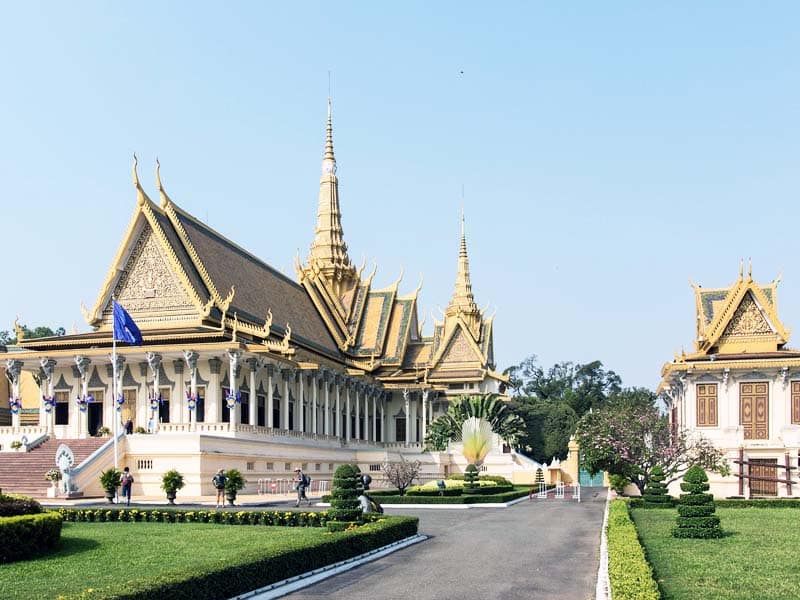
Royal Palace complex in Phnom Penh featuring ornate Khmer architecture, manicured gardens, and ceremonial courtyards under clear skies
National Museum of Cambodia in Phnom Penh showcasing classic Khmer architecture, tranquil courtyards, and cultural heritage galleries

What to See in Phnom Penh

Royal Palace – Glimmer of the Kingdom
Gaze upon gilded rooftops and manicured courtyards overlooking the river. Inside, the Silver Pagoda gleams with thousands of pure silver tiles.

Wat Phnom – Birthplace of the City
Climb the shaded staircase to the city’s namesake temple, where Lady Penh is said to have founded Phnom Penh centuries ago.

National Museum – Cradle of Khmer Art
Step inside tranquil red pavilions filled with ancient sculptures, carvings, and bronzes that trace the spiritual soul of Cambodia.

Tuol Sleng Genocide Museum – Memory and Resilience
Walk through stark classrooms turned prison cells, now memorials preserving stories of loss and the strength to rebuild.

Choeung Ek Killing Fields – Quiet Reflection
Stand beneath serene trees and listen to the wind move through the memorial stupas—a place of sorrow, remembrance, and peace.

Central Market – Art Deco Icon
Shop beneath the vast yellow dome for jewels, silks, and spices. The hum of vendors and scent of jasmine fill the warm air.

Wat Ounalom – Living Faith
Join monks in quiet meditation at Phnom Penh’s oldest monastery, where ancient scrolls and statues preserve centuries of devotion.

Things to Do in Phnom Penh

Stroll the Riverside Promenade – City’s Beating Heart
Wander along Sisowath Quay as the Mekong and Tonlé Sap meet. Street vendors, cafés, and saffron robes color the sunset scene.

Cruise the Mekong at Dusk – Golden Drift
Sail past glittering pagodas and the royal skyline as the river glows bronze and lilac beneath the fading light.

Dine on the River – Flavors of Phnom Penh
Savor Khmer cuisine aboard a floating restaurant or rooftop terrace, where the city lights shimmer across the water.

Browse Street 240 – Bohemian Charm
Discover boutiques, art galleries, and leafy cafés tucked between colonial facades—a favorite haunt for locals and travelers alike.

Explore the Russian Market – Local Treasure Trove
Lose yourself in a maze of stalls selling silks, carvings, and vintage finds, the air rich with incense and sizzling street food.

Visit the Independence Monument – National Pride
Admire this lotus-shaped landmark glowing at twilight, a symbol of Cambodia’s hard-won freedom and unity.

Experience Cambodian Living Arts – Cultural Revival
Be transported by traditional dance and live music performances celebrating Cambodia’s rebirth through rhythm, grace, and storytelling.

Traditional Apsara dance performance in Phnom Penh showcasing classical Khmer mythological storytelling and ceremonial costume artistry
Illuminated Independence Monument in Phnom Penh at night with ceremonial fountains and city skyline backdrop

Why Visit Phnom Penh

Phnom Penh offers meaningful insight into Cambodia’s past and present. The Royal Palace and Silver Pagoda provide a window into the country’s artistic and ceremonial traditions, while the National Museum highlights classical Khmer sculpture and archaeology. The city also serves as an important place to understand Cambodia’s more recent history through sites such as the Tuol Sleng Genocide Museum and Choeung Ek Memorial, which present their stories with clarity and respect.

Beyond its cultural landmarks, Phnom Penh has an energetic yet manageable pace that makes exploring enjoyable. River cruises, local markets, and emerging culinary scenes add variety to a stay, while craft workshops and social enterprises allow visitors to support community-based initiatives. The combination of historical depth, living culture, and approachable urban life makes Phnom Penh a compelling complement to temple regions like Siem Reap.

What's Unique About Phnom Penh

Few capitals carry history as visibly and unflinchingly as Phnom Penh. The city preserves royal grandeur alongside the memory of national trauma, allowing both to shape the civic identity without dilution. Its museums, memorials, and preserved institutions are essential not as attractions, but as anchors of collective memory.

Equally distinctive is the city’s rhythm of renewal. Young designers, chefs, and artists work beside monks, boat pilots, merchants, and archivists—forming a creative tension that feels grounded rather than performative. Phnom Penh is not defined by reinvention alone, but by continuity shaped through resilience.

Phnom Penh Travel Guide image
Ornate golden roof spires and intricate carvings at the Royal Palace in Phnom Penh showcasing classical Khmer architectural craftsmanship

Best time to visit: November to February, when days are cooler, skies are clear, and the city’s royal temples, riverside promenades, and outdoor cafés shine in golden light.

Weather and Seasons in Phnom Penh

Cool & Dry Season (November–February)
Clear skies and mild temperatures make this the best time to explore the city’s landmarks and riverfront. Sunsets over the Mekong are especially vivid and serene.

Hot Season (March–May)
The capital basks in intense heat and bright light. Early mornings and late afternoons are ideal for sightseeing, while cafés and rooftop bars offer cool midday retreats.

Rainy Season (June–October)
Short, tropical downpours bring Phnom Penh to life in shimmering greens. The city slows into a gentler rhythm as the Mekong swells and the air turns fragrant and fresh.

Phnom Penh does not reveal itself all at once—it unfolds through contrast, memory, and daily movement. Its strength lies in its honesty: a capital shaped by history that continues to evolve without abandoning its past.

When woven into a broader Cambodia itinerary or explored on its own, Phnom Penh offers a grounding counterpoint to temple landscapes and coastal retreats. It asks visitors not to escape, but to engage—to see Cambodia as a living culture shaped by endurance, creativity, and human depth.

Evening promenade near the Independence Monument in Phnom Penh with illuminated Khmer towers and modern city skyline backdrop

ACCOMODATIONS IN PHNOM PENH

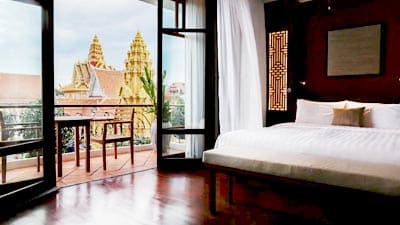
Phnom Penh Amanjaya Pancam Suites with a view of the Royal temple.

Amanjaya Pancam Suites

Commanding one of Phnom Penh’s most sought-after addresses, Amanjaya Pancam Suites sits gracefully at the meeting point of the Mekong and Tonlé Sap Rivers...
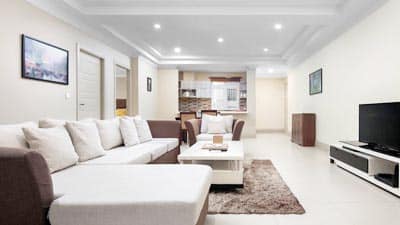
Spacious luxury suite at Palace Gate Hotel Phnom Penh featuring modern living area, polished interiors, and residential-style comfort

Palace Gate Hotel

Ideally positioned beside the gilded spires of the Royal Palace, Palace Gate Hotel Phnom Penh occupies one of the city’s most distinguished addresses...
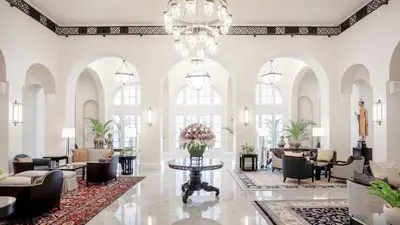
Grand colonial lobby at Raffles Hotel Le Royal Phnom Penh featuring arched colonnades, chandeliers, and heritage-era elegance

Raffles Hotel Le Royal

A legend in the heart of Cambodia’s capital, Raffles Hotel Le Royal stands gracefully between the tree-lined boulevards of Daun Penh district, moments from the Royal Palace...
SUGGESTED ITINERARIES

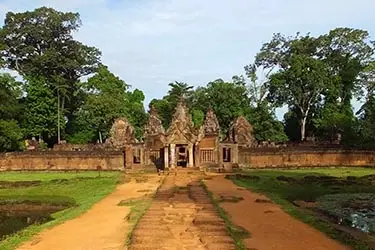
Historic Khmer temple entrance at Banteay Srei surrounded by lush greenery

Jewels of Angkor

Siem Reap

A focused Angkor stay based in Siem Reap, with guided access to Angkor Wat, Angkor Thom, and Ta Prohm—structured for architectural depth, historical context, and unhurried time at the temples.
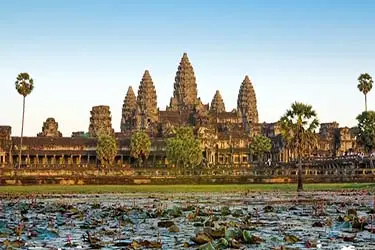
Angkor Wat temple at sunrise in Siem Reap, Cambodia, reflected across a lotus-filled pond—iconic Khmer architecture and UNESCO World Heritage Site in the Angkor Archaeological Park.

Cambodia Impressions

Siem Reap, Phrom Penh, Kep

A broader Cambodia journey linking Angkor’s temples with Phnom Penh’s history and Kep’s coastal calm—balancing heritage, river culture, and space to unwind beyond the headline sites.
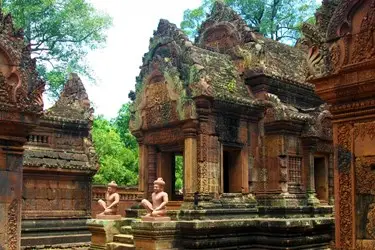
Intricately carved red sandstone temple ruins at Banteay Srei in Angkor, Cambodia, surrounded by lush forest and known for its detailed Khmer architecture.

Enchanting Vietnam & Cambodia

Hanoi, Ninh Binh, Halong Bay, Hoi An, Siem reap, Ho Chi Minh City

A richly layered journey through Vietnam and Cambodia—where limestone landscapes, lantern-lit heritage towns, and Angkor’s temple grandeur reveal the cultural heart of Indochina.


Ready to embark on your adventure of a lifetime?

However you imagine Asia, our luxury travel specialists will bring it to life — flawlessly.

The Explorient Difference

Scroll to Top

Please fill out the form below so we can assist you as efficiently as possible. We aim to respond within 1-2 business days.

Name
What's your preferred contact method?
Press Ctrl Key and mouse click to multi-select.