Paro Travel Guide

Discover your own version of

Paro

Highlights

Paro – Bhutan’s Gateway of Sacred Monasteries, Alpine Valleys & Living Tradition

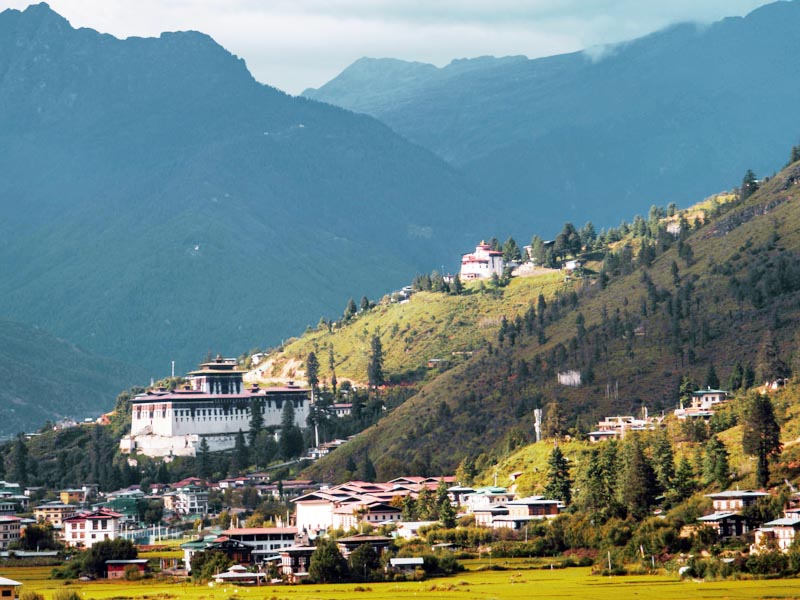
Paro sits within a broad Himalayan valley shaped by pine-covered slopes, cultivated terraces, and the steady presence of the Paro Chhu. The town’s scale feels intentionally measured—clusters of whitewashed, timber-trimmed buildings arranged along the river corridor, framed by ridgelines that keep the landscape close and legible. Dzongs, monasteries, and chortens punctuate the valley with a quiet architectural authority, their forms echoing Bhutan’s deep relationship between geography, governance, and faith.

Cultural identity here is inseparable from the built environment. Fortress-monasteries and monastic precincts still function as civic and spiritual anchors, while traditional craftsmanship appears in carved woodwork, painted motifs, and carefully maintained façades that preserve a coherent visual language. Together, these elements create a setting where heritage is not staged but lived—an atmosphere defined by continuity, restraint, and a clear sense of place shaped by form, ritual, and enduring cultural lineage.

Panoramic view of Paro Valley in Bhutan featuring Rinpung Dzong fortress and Ta Dzong museum nestled among lush green hills with the Himalayan mountains in the background.
Kyichu Lhakhang temple in Paro, Bhutan, surrounded by vibrant gardens and traditional Bhutanese architecture under a clear blue sky

What to See in Paro

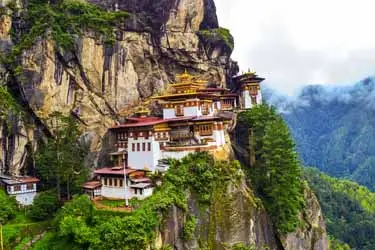
Tiger’s Nest Monastery (Taktsang) — Observe Bhutan’s most revered site dramatically set against a sheer cliff face, where pilgrimage, devotion, and landscape converge.

Paro Dzong (Rinpung Dzong) — Explore a fortress-monastery that anchors the valley, combining administrative function with sacred spaces and traditional Bhutanese architecture.

Kyichu Lhakhang Temple — Visit one of Bhutan’s oldest temples, where prayer wheels, ancient murals, and quiet courtyards reflect early Buddhist foundations.

National Museum of Bhutan — Discover regional artifacts, religious art, and historical objects housed within a restored watchtower overlooking the valley.

Traditional Farmhouses in the Paro Valley — See how domestic architecture, agriculture, and family life are integrated within Bhutan’s rural landscape.

Drukgyel Dzong Ruins — View the remains of a strategic fortress once guarding against Tibetan invasions, framed by open fields and distant Himalayan peaks.

Things to Do in Paro

Hike the Tiger’s Nest Trail — Follow a forested mountain path used by pilgrims, gradually ascending through pine groves and prayer flags toward Taktsang Monastery.

Walk Paro Town on Foot — Stroll along the main street and side lanes to observe local markets, traditional shopfronts, and everyday life unfolding at an unhurried pace.

Attend a Monastic Prayer Session — Witness structured Buddhist rituals within active monasteries, guided by rhythmic chanting and ceremonial movement.

Explore Valley Paths & Riverside Walks — Take gentle walks through fields, villages, and riverbanks that reveal Paro’s agricultural rhythms and settlement patterns.

Visit Local Artisan Workshops — Step into small studios where woodcarving, painting, and textile crafts continue techniques passed down through generations.

Observe Seasonal Festivals (Tshechu) — Experience masked dances, music, and communal gatherings that transform monasteries into cultural centers during festival periods.

Scenic view of Paro Dzong and surrounding hillside buildings in Paro Valley, Bhutan, with snow-capped Himalayan mountains in the background.
Paro Travel Guide image

Why Visit Paro

Paro is ideal for travelers seeking cultural depth without sensory overload. The valley offers meaningful access to Bhutanese life through monastery visits, forested walks, and village encounters, all set within a naturally serene environment. Experiences here are contemplative rather than rushed, encouraging presence and reflection.

As Bhutan’s primary gateway, Paro also serves as an elegant introduction to the country’s wider philosophy of balance and sustainability. Its well-preserved heritage, gentle landscapes, and thoughtful tourism approach make it a rewarding destination for those who value authenticity, measured exploration, and a strong sense of place.

What's Unique About Paro

Paro offers a rare continuity between landscape, belief, and daily life. Sacred sites are not preserved as static monuments but remain active centers of worship and community rhythm. Monasteries cling to cliffs, dzongs anchor valley towns, and prayer wheels turn along village paths—each part of a living spiritual ecosystem shaped as much by geography as by tradition.

Unlike larger Himalayan hubs, Paro has retained a quiet integrity. Its scale remains human, its architecture regulated, and its pace intentionally unhurried. Agriculture, monastic life, and craftsmanship coexist within the same valleys, allowing visitors to observe how Bhutan’s cultural values are practiced rather than performed.

Pack horses trekking through the Himalayas in Bhutan with snow-covered mountains in the background
Traditional Bhutanese temple with white walls and ornate wooden details set against a grassy hillside and blue sky in a serene rural landscape.

Best time to visit: Autumn (October–November) and spring (March–May) offer the most favorable balance of weather, visibility, and outdoor conditions for exploring Paro.

Weather and Seasons in Paro

Spring (March–May)
Mild temperatures, clear skies, and blooming orchards define spring in the Paro Valley. This season offers excellent conditions for hiking to Tiger’s Nest, valley walks, and cultural sightseeing, with fresh greenery enhancing the landscape.

Summer / Monsoon (June–September)
Warmer weather and seasonal rainfall bring lush vegetation and softer light across the valley. While showers are common, travel remains possible, and fewer visitors create a quieter atmosphere around major sites. Mountain views may be intermittent due to cloud cover.

Autumn (October–November)
Cool, dry air and consistently clear skies mark autumn as Paro’s peak season. Visibility is at its best for Himalayan backdrops, festivals take place across the region, and conditions are ideal for trekking, monastery visits, and outdoor exploration.

Winter (December–February)
Cold mornings and evenings characterize winter, with dry weather and generally clear skies. Snow may dust higher elevations, adding contrast to the valley, while daytime temperatures remain suitable for sightseeing and cultural visits.

Paro offers a sense of place that lingers quietly rather than loudly—shaped by open valleys, time-worn monasteries, and a rhythm of life guided by tradition and landscape. It is a destination best experienced with intention, where moments unfold gradually and meaning is found in stillness as much as movement.

Whether you are drawn by Bhutan’s spiritual heritage, its mountain paths, or the balance it strikes between preservation and daily life, Paro invites a thoughtful approach to travel. When you’re ready to explore the valley at your own pace, we’ll design a journey that reflects its character—measured, immersive, and deeply rooted in place.

Paro Taktsang (Tiger’s Nest Monastery) perched on a cliffside in the forested mountains of Bhutan

ACCOMODATIONS IN PARO

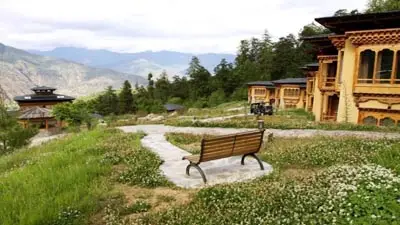
Naksel Boutique Resort, Paro reccommended accommodation

Naksel Boutique Resort

Naksel’s design draws from traditional Bhutanese architecture, interpreted through a contemporary boutique lens. Stone walls, timber beams...
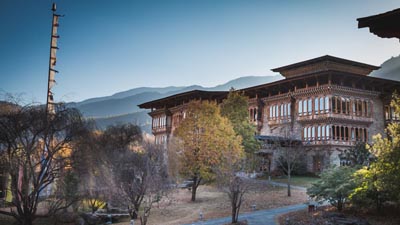
Zhiwa Ling Heritage Hotel in Paro, Bhutan, featuring traditional Bhutanese architecture set amid landscaped grounds with mountain views at dusk.

Zhiwaling Heritage

Zhiwaling Heritage is conceived as a living expression of Bhutanese craftsmanship. Constructed using locally sourced stone...
SUGGESTED ITINERARIES

Tiger’s Nest Monastery (Paro Taktsang) in Bhutan, dramatically perched on a cliffside above forested mountains.

Priceless Bhutan

Thimpu, Punakha, Paro

A focused journey through Bhutan’s western valleys, exploring monasteries, fortress architecture, and living traditions shaped by Himalayan culture.
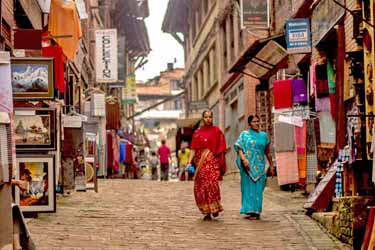
Colorful market street in Kathmandu, Nepal, with women in traditional attire walking along a cobblestone lane lined with shops and hanging textiles.

Signature India & Nepal

Delhi, Udaipur, Jodhpur, Jaipur, Agra, Kathmandu

A cross-border journey linking India’s royal cities and Mughal heritage with Kathmandu’s temple-filled valley and Himalayan cultural landscape.
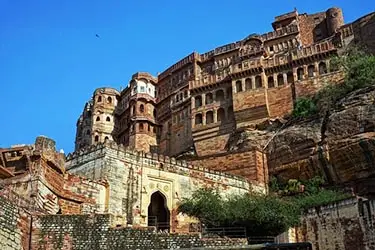
Mehrangarh Fort in Jodhpur, India, rising dramatically above the city on a rocky hill, with massive stone walls, intricate facades, and a grand प्रवेश gate.

Mystical Gems of India

Mumbai, Aurangabad, Udaipur, Jaipur, Agra, Delhi

An architecture-focused journey through India’s most extraordinary sites, from Ajanta and Ellora’s rock-cut caves to Rajasthan’s palace cities and Mughal


Ready to embark on your adventure of a lifetime?

However you imagine Asia, our luxury travel specialists will bring it to life — flawlessly.

The Explorient Difference

Scroll to Top

Please fill out the form below so we can assist you as efficiently as possible. We aim to respond within 1-2 business days.

Name
What's your preferred contact method?
Press Ctrl Key and mouse click to multi-select.