Thimpu Travel Guide
Discover your own version of
Thimpu
Highlights
- Thimphu Cultural Rhythms — Move through monasteries, markets, and civic spaces where daily life and ritual unfold side by side.
- Bhutanese Arts & Crafts Heritage — Observe master artisans preserving weaving, painting, and woodcarving traditions at national institutes.
- Memorial Chorten Devotion — Join the gentle clockwise flow of prayer and murmured mantras around Thimphu’s spiritual heart.
- Weekend Market Encounters — Wander open-air stalls alive with local produce, incense, textiles, and quiet community exchange
- Hillside Monastery Views — Climb above the valley to temples where prayer flags lift against forested slopes.
- Modern Bhutan Perspectives — Discover cafés, galleries, and civic architecture reflecting Thimphu’s evolving identity within tradition.
Thimphu – Bhutan’s Living Capital of Culture, Governance & Himalayan Setting
Thimphu unfolds along the Wang Chhu River, set within a mountain valley where forested slopes and open farmland press gently against the city’s edges. As Bhutan’s capital, it balances administrative function with a deliberately modest scale—low-rise buildings, traditional façades, and civic spaces arranged to preserve sightlines to surrounding hills. Dzongs and monasteries rise with quiet authority above the urban core, grounding the city in a landscape that feels ordered, legible, and closely tied to its natural setting.
Here, cultural continuity is embedded in daily life rather than preserved as display. Government buildings and sacred institutions share architectural language, reflecting Bhutan’s integration of governance, spirituality, and design. Prayer flags line ridges, residents gather at chortens for daily circumambulation, and artisan traditions—textiles, wood carving, metalwork—remain visible across workshops and markets. Thimphu presents a living capital shaped by restraint and intention, where modern civic life moves in step with long-held traditions and a clearly defined sense of national identity.
What to See in Thimpu
Tashichho Dzong — Observe Bhutan’s seat of government and monastic authority, where fortress architecture and ceremonial life converge along the Wang Chhu River.
Buddha Dordenma Statue — View one of the world’s largest seated Buddha statues, overlooking the valley with panoramic perspectives and quiet symbolic presence.
National Memorial Chorten — Experience a living monument where residents circle prayer wheels and offer daily devotions in a rhythm of communal spirituality.
Folk Heritage Museum — Explore a restored traditional farmhouse showcasing domestic architecture, tools, and everyday Bhutanese life across generations.
National Textile Museum — See intricate handwoven textiles that reflect Bhutan’s regional identities, symbolism, and enduring craft traditions.
Changangkha Lhakhang — Visit a hilltop temple revered for protective blessings, offering views across Thimphu’s clustered rooftops and surrounding hills.
Things to Do in Thimpu
Walk the Wang Chhu Riverside — Follow gentle paths along the river, observing daily life unfold between monasteries, markets, and residential neighborhoods.
Attend a Monastic Ceremony — Witness prayer rituals and chanting within active temples, offering insight into Bhutan’s living Buddhist traditions.
Browse Handicraft Markets — Explore artisan stalls selling textiles, paper, woodwork, and metal crafts produced by local cooperatives.
Join a Guided Cultural Walk — Navigate Thimphu’s compact urban core with expert context, connecting modern institutions to historical foundations.
Visit a Traditional Archery Ground — Observe Bhutan’s national sport practiced in open fields, accompanied by song, ritual, and social exchange.
Enjoy Local Bhutanese Cuisine — Sample dishes centered on chilies, cheese, and seasonal produce in understated settings shaped by local taste.
Why Visit Thimpu
Thimphu is ideal for travelers who want cultural depth with contemporary context. As Bhutan’s civic heart, it offers access to lived national identity through monasteries, institutes, markets, and everyday street life—set against a valley landscape that still feels distinctly Himalayan. The pace is steady rather than hectic, making it easy to absorb Bhutan’s rituals, aesthetics, and public life without feeling rushed.
While many Bhutanese destinations feel rural and inward-looking, Thimphu provides the clearest view of how tradition operates in a modern capital. You’ll see how governance, spirituality, and design principles remain integrated—expressed in fortress architecture, curated public spaces, and a strong visual coherence across the city. For travelers who value authenticity, measured exploration, and a fuller understanding of Bhutan beyond its monasteries, Thimphu is both grounding and quietly compelling.
What's Unique About Thimpu
Thimphu offers a rare continuity between governance, belief, and everyday life. Dzongs still function as living centers of both administration and monastic practice, while chortens, temples, and prayer spaces remain integrated into the city’s daily movement. Museums, institutes, and craft traditions are not treated as heritage displays, but as active expressions of national identity—maintained through use, ritual, and continuity.
Unlike many modern capitals, Thimphu has preserved a measured coherence. Its scale remains contained, its architecture intentionally regulated, and its pace shaped by Bhutanese values rather than urban urgency. Civic life, spiritual practice, and cultural preservation unfold side by side, allowing visitors to see how Bhutan’s modern state is structured to protect its living traditions.
Best time to visit: Autumn (October–November) and spring (March–May) provide the most balanced weather and visibility for exploring Thimphu’s cultural and civic landscape.
Weather and Seasons in Thimpu
Spring (March–May)
Mild temperatures, clear skies, and fresh greenery define spring in the Thimphu Valley. This season offers comfortable conditions for city walks, monastery visits, and excursions to nearby viewpoints, with blooming hillsides adding color to the surrounding landscape.
Summer / Monsoon (June–September)
Warmer weather and regular rainfall shape the summer months, bringing lush vegetation to the valley and softer light across the city. While afternoon showers are common, cultural sightseeing remains feasible, and reduced visitor numbers create a quieter experience at key sites. Mountain views may be limited during periods of cloud cover.
Autumn (October–November)
Cool, dry conditions and excellent visibility make autumn Thimphu’s most popular season. Clear skies enhance views of surrounding ridgelines, major festivals take place, and the weather is well suited for walking tours, monastery exploration, and day trips beyond the city.
Winter (December–February)
Cold mornings and evenings define winter, with dry weather and generally clear skies throughout the season. Snow may appear on higher elevations, while daytime temperatures remain suitable for urban exploration, museum visits, and cultural touring.
Thimphu offers a measured introduction to Bhutan’s values, where civic life, spiritual practice, and landscape coexist with clarity and intention. Its monasteries, institutions, and everyday rhythms reveal a capital that functions not as a spectacle, but as a living expression of national identity shaped by restraint, continuity, and thoughtful governance.
Whether you are drawn to cultural insight, architectural heritage, or a deeper understanding of Bhutanese life beyond the valleys, Thimphu provides a grounded and rewarding experience. When you’re ready to explore its monasteries, neighborhoods, and surrounding hills at a considered pace, we’ll design an itinerary that reflects your interests and sense of discovery.
ACCOMODATIONS IN THIMPU

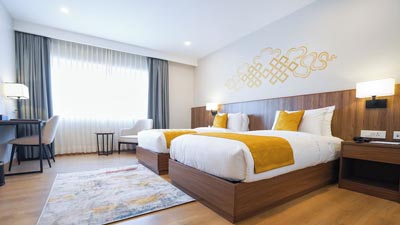
Capital Thimpu Hotel
Located in the center of Thimphu, Capital Thimphu sits within easy reach of the city’s key cultural and civic landmarks, including monasteries, museums...
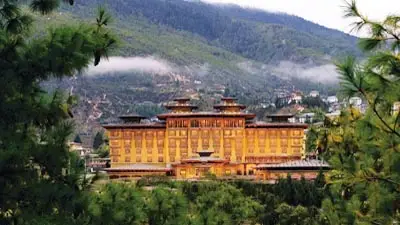
Pemako Thimpu Hotel
Set on the upper slopes of Thimphu Valley, Pemako Thimphu occupies a privileged position overlooking Bhutan’s capital, where forested hills...
SUGGESTED ITINERARIES

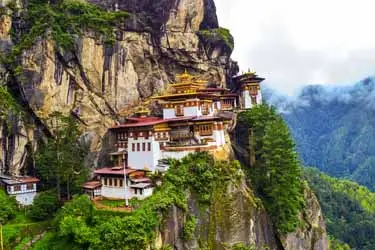
Priceless Bhutan
Thimpu, Punakha, Paro
A focused journey through Bhutan’s western valleys, exploring monasteries, fortress architecture, and living traditions shaped by Himalayan culture.
Signature India & Nepal
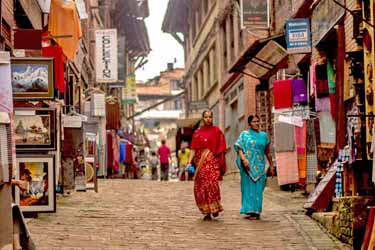
Delhi, Udaipur, Jodhpur, Jaipur, Agra, Kathmandu
A cross-border journey linking India’s royal cities and Mughal heritage with Kathmandu’s temple-filled valley and Himalayan cultural landscape.
Mystical Gems of India
Mumbai, Aurangabad, Udaipur, Jaipur, Agra, Delhi
An architecture-focused journey through India’s most extraordinary sites, from Ajanta and Ellora’s rock-cut caves to Rajasthan’s palace cities and Mughal

Ready to embark on your adventure of a lifetime?
However you imagine Asia, our luxury travel specialists will bring it to life — flawlessly.