Hue Travel Guide

Discover your own version of

HUE

Highlights

Hue: Vietnam’s Living Legacy on the Perfume River

Huế rests along the Perfume River and is best known as Vietnam’s former imperial capital, where the legacy of the Nguyễn Dynasty is preserved through its citadel, royal tombs, temples, and pagodas. Designated a UNESCO World Heritage Site, the city’s historic monuments and tree-lined riverbanks create a setting that reflects centuries of royal history while maintaining a calm, unhurried atmosphere.

Beyond its historic landmarks, Huế remains a cultural center where imperial traditions continue to influence daily life. Court-inspired cuisine, traditional music, religious festivals, and local craftsmanship all contribute to the city’s distinctive character. Together, these enduring traditions offer visitors a deeper understanding of Vietnam’s cultural heritage while preserving the quiet elegance for which Huế is renowned.

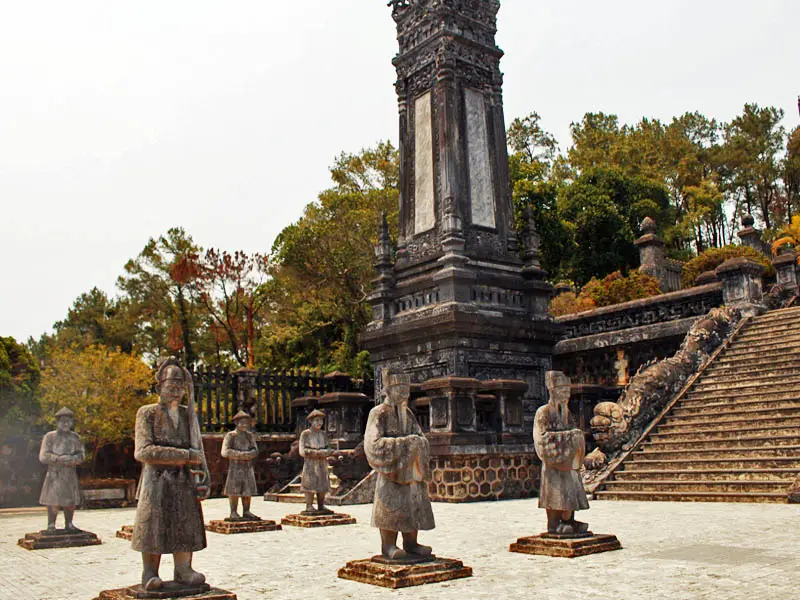
Stone guardian statues at Khai Dinh Tomb in Hue Vietnam with imperial architecture and terrace steps
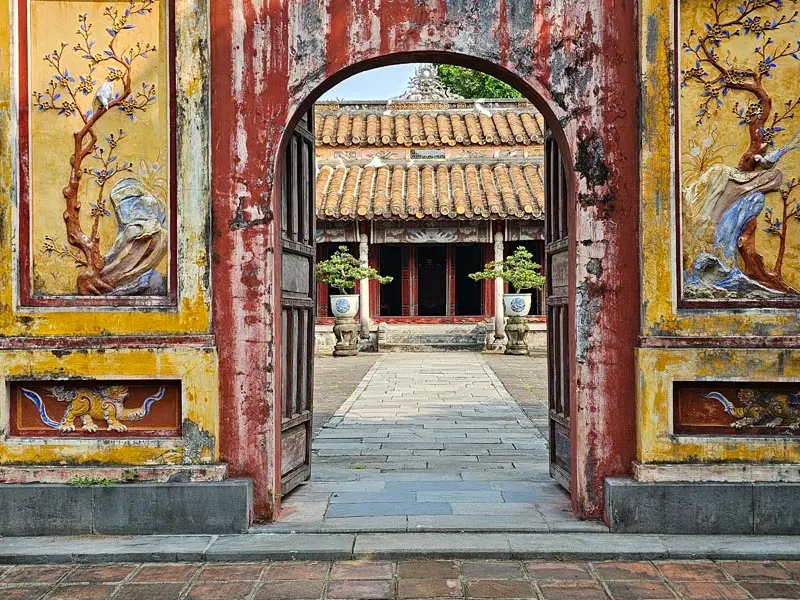
Historic gate and courtyard of the Imperial City in Hue Vietnam with colorful ancient murals and traditional architecture

What to See in Hue

Imperial City
The centerpiece of Huế’s UNESCO World Heritage Site, the Imperial City was the political and ceremonial heart of the Nguyễn Dynasty from 1802 to 1945. Its fortified walls, palaces, temples, and courtyards offer a fascinating glimpse into Vietnam’s imperial past.

Thiên Mụ Pagoda
Overlooking the Perfume River, this seven-story pagoda is one of Huế’s most recognizable landmarks. Dating to the early 17th century, it remains an active Buddhist temple and an enduring symbol of the city.

Royal Tomb of Minh Mạng
Set among tranquil gardens, lakes, and pine-covered hills, the tomb of Emperor Minh Mạng is widely regarded as one of the finest examples of Nguyễn Dynasty architecture. Its harmonious layout reflects Confucian principles of balance and symmetry.

Royal Tomb of Khải Định
Distinctive for its blend of Vietnamese and European architectural influences, Emperor Khải Định’s tomb features elaborate mosaics, richly decorated interiors, and an elevated hillside setting with panoramic views.

Đông Ba Market
Huế’s largest traditional market offers everything from fresh produce and local specialties to handicrafts and textiles. It is an excellent place to experience everyday life and sample many of the city’s renowned regional dishes.

Perfume River
Flowing through the heart of Huế, the Perfume River links many of the city’s most important historical and cultural sites. A leisurely boat cruise offers a different perspective on the city’s temples, pagodas, and riverside landscapes.

Things to Do in Hue

Cruise the Perfume River
A leisurely boat cruise along the Perfume River offers a different perspective on Huế’s pagodas, royal monuments, and riverside villages. Many cruises include visits to historic sites such as Thiên Mụ Pagoda while showcasing the city’s tranquil scenery.

Explore the Countryside by Bicycle
Cycle through quiet villages, rice fields, and rural landscapes surrounding Huế, with opportunities to visit traditional craft workshops and experience daily life beyond the city’s historic center.

Experience Huế’s Imperial Cuisine
Renowned as one of Vietnam’s great culinary capitals, Huế is known for refined imperial dishes as well as regional specialties such as bún bò Huế, bánh bèo, and bánh khoái, reflecting centuries of royal culinary tradition.

Visit the Royal Tombs
Explore the elaborate tombs of emperors Minh Mạng, Tự Đức, and Khải Định, each distinguished by its own architectural style, landscaped gardens, and reflection of the emperor’s personality and reign.

Enjoy a Traditional Music Performance
Experience Nhã nhạc, Vietnam’s imperial court music and a UNESCO-recognized cultural heritage, through performances that preserve one of the country’s most important artistic traditions.

Explore the Imperial City
Allow time to wander the Imperial City beyond its main monuments, where restored palaces, temple courtyards, and ancient gates reveal the scale and significance of Vietnam’s former imperial capital.

Ancient stone mandarin statues at Khai Dinh Royal Tomb in Hue Vietnam with lush green mountains in the background
Hue Travel guide image

Why Visit Hue

Huế appeals to travelers interested in Vietnam’s imperial heritage and the cultural traditions it continues to inspire. The Imperial City, with its fortified walls, palaces, and ceremonial halls, offers a remarkable window into the history of the Nguyễn Dynasty. Beyond the citadel, the royal tombs—each reflecting a distinct architectural style and imperial vision—provide further insight into one of Vietnam’s most significant historical periods. Together, these landmarks form one of the country’s most complete and well-preserved cultural landscapes.

Beyond its historic monuments, Huế offers a relaxed and rewarding way to experience central Vietnam. River cruises, leisurely walks, and visits to temples and traditional villages allow travelers to explore the city at an unhurried pace. Renowned for its refined imperial cuisine, Huế also offers one of Vietnam’s most distinctive culinary traditions. This combination of history, culture, and everyday life makes Huế an enriching addition to any journey through Vietnam.

What's Unique About Hue

Huế’s uniqueness stems from its role as the seat of Vietnam’s last imperial dynasty. The Imperial City forms the centerpiece of a remarkably well-preserved complex where architecture, symbolism, and landscape design come together to reflect the ideals of the Nguyễn Dynasty. Beyond the citadel, royal tombs set among forests, lakes, and gardens reveal distinct interpretations of imperial power, spirituality, and artistic expression. Together, these monuments create a concentration of imperial heritage found nowhere else in Vietnam.

Huế’s cultural traditions further distinguish the city. It is renowned for its imperial court music, royal cuisine, and longstanding artistic traditions, while local artisans continue to produce lacquerware, conical hats, and other regional crafts. Combined with the city’s temples, riverside setting, and enduring customs, these living traditions give Huế a distinctive cultural identity that extends well beyond its historic monuments.

Traditional fishermen casting large Vietnamese nets on the Perfume River in Hue at sunrise
Vietnamese woman in ao dai walking through the ornate Ngo Mon Gate at Hue Imperial City on a rainy day

Best Time to Visit: February through May generally offers the most favorable weather, with warm temperatures, lower humidity, and ideal conditions for exploring Huế’s historic landmarks and cultural attractions.

Weather and Seasons in Halong Bay

Spring (March–May)
Spring brings warm temperatures, relatively low rainfall, and comfortable conditions for exploring Huế’s historic landmarks. It is an excellent time to visit the Imperial City, royal tombs, and pagodas, while enjoying leisurely walks along the Perfume River.

Summer (June–August)
Summer is hot and humid, with frequent afternoon showers that leave the surrounding countryside lush and vibrant. Sightseeing is often most comfortable in the mornings and late afternoons, while the city’s gardens, lotus ponds, and riverside landscapes are at their most colorful.

Autumn (September–November)
Autumn brings gradually cooler temperatures, lower humidity, and fewer visitors as the rainy season begins to ease. The more comfortable weather makes it a pleasant time to explore Huế’s historic sites, riverside promenades, and surrounding countryside.

Winter (December–February)
Winter is the coolest time of year, with mild temperatures and occasional light rain or mist. The quieter season offers a peaceful atmosphere for visiting the Imperial City, temples, museums, and royal tombs without the larger crowds of peak travel periods.

Huế offers a thoughtful journey into Vietnam’s imperial past, where historic monuments, riverside landscapes, and enduring cultural traditions come together in a setting of remarkable tranquility. Whether exploring the Imperial City, visiting royal tombs, or strolling along the Perfume River, travelers gain a deeper appreciation for one of the country’s most significant cultural centers.

Whether experienced as part of a broader journey through central Vietnam or as a destination in its own right, Huế leaves a lasting impression through its history, architecture, and refined cultural heritage. Explorient’s privately guided journeys provide the insight and flexibility to experience the city alongside the region’s other remarkable destinations.

Historic Thai Hoa Palace inside the Imperial City of Hue reflected in lotus moat on a sunny day in Vietnam

Nearby / Combine With

ACCOMODATIONS IN HUE

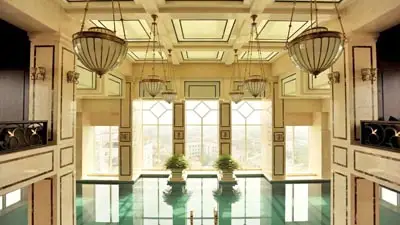
Eldora Hotel in Hue, Vietnam

Eldora Hotel

Set along the tree-lined boulevard of Hoàn Kiếm, the Sofitel Legend Metropole Hanoi stands as a timeless witness to the city’s shifting eras. Just steps from the serene ...
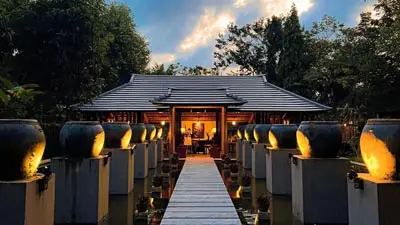
Serene entrance to Pilgrimage Village Resort & Spa in Hue, Vietnam, featuring traditional architecture and lantern-lit pathways that evoke tranquility and cultural charm.

Pilgrimage Village Resort

Rising near the storied streets of Hanoi’s Old Quarter, Grand Mercure Hanoi holds its place at the crossroads of heritage and modernity. ...
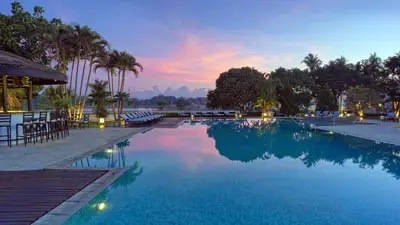
Riverside infinity pool at Azerai La Residence Hue, Vietnam, offering elegant colonial charm and serene views for a refined luxury stay near the Perfume River.

Azerai La Residence

Rising above the leafy boulevards of Hanoi’s French Quarter, Meliá Hanoi commands a vantage point where history and modernity converge...
SUGGESTED ITINERARIES

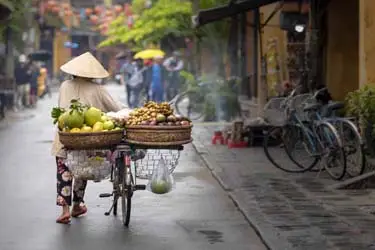
Street vendor pushing a bicycle laden with fruit through a narrow lane in Vietnam, wearing a traditional conical hat amid everyday local street life.

Signature Vietnam

Saigon, Nha Trang, Hoi An, Hue, Hanoi, Halong Bay

A comprehensive private journey linking Vietnam’s cultural capitals, coastal beauty, and everyday traditions—designed for effortless discovery and a clear sense of the country as a whole.
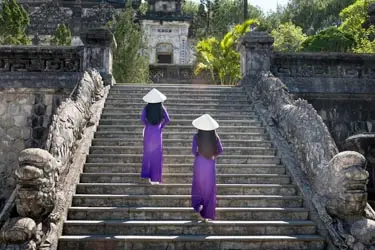
Two women in traditional áo dài and conical hats ascending stone steps at an ancient imperial site in Vietnam, framed by historic architecture and lush greenery.

Spectacular Vietnam

Hanoi, Ninh Binh, Halong Bay, Hoi An, Phu Quoc, Saigon

An iconic Vietnam experience blending celebrated landscapes, cultural depth, and a true island escape—ideal for those seeking both discovery and indulgent leisure.
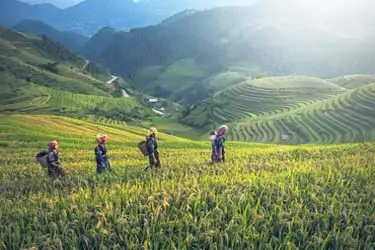
Farmers walking through terraced rice fields in the mountains of Sapa, northern Vietnam.

Northern Vietnam Adventure

Hanoi, Sapa, Halong & Lan Ha Bay

A nature-forward northern journey through mountain landscapes, minority cultures, and emerald bays—designed for travelers who want active exploration balanced by cultural depth.


Ready to embark on your adventure of a lifetime?

However you imagine Asia, our luxury travel specialists will bring it to life — flawlessly.

The Explorient Difference

Scroll to Top

Please fill out the form below so we can assist you as efficiently as possible. We aim to respond within 1-2 business days.

Name
What's your preferred contact method?
Press Ctrl Key and mouse click to multi-select.