
Ho Chi Minh City—still affectionately called Saigon—doesn’t always reveal itself at first glance.
For some, it’s a brief stop. A gateway. A place passed through rather than lingered in. But for those willing to give it a day—just one—something more layered begins to emerge: a city of contrasts, where colonial facades meet restless energy, where quiet alleyways exist just steps from relentless traffic.
If you have just one day in Ho Chi Minh City—whether at the start or end of a longer journey—this itinerary offers a balanced way to experience it. Structured yet unhurried, it moves between history and daily life, from the city’s edges back into its pulse.
It’s a full day—but with an early start and a bit of intention, it comes together seamlessly.
A Measured Beginning
Breakfast at Your Hotel
In Vietnam, breakfast is not something to rush through.
Even in larger hotels, the morning spread reflects a culinary tradition that treats the first meal seriously. Alongside familiar Western options, you’ll find pho made to order, congee simmered since early morning, fresh spring rolls, bánh mì stations, and regional dishes that change depending on where in the country you are. In Ho Chi Minh City, expect broken rice with grilled pork, fried bánh xèo, and strong cà phê sữa đá served at the table or from a street cart just outside the lobby.
This isn’t just a meal—it’s an orientation. The flavors here preview what you’ll encounter throughout the day: the sweetness of caramelized pork, the sharpness of fresh herbs, the layering of texture and temperature that defines Vietnamese cooking. Travelers often say breakfast in Vietnam reset their expectations for the rest of the trip.
Take your time here. The day ahead moves quickly.
Early Morning — The Cu Chi Tunnels


Leave the city behind for a few hours and head toward the Cu Chi Tunnels.
Set roughly 90 minutes outside Ho Chi Minh City, this vast underground network stretches for hundreds of miles, once serving as a critical system of movement, shelter, and strategy during the Vietnam War.
Today, it offers a deeper understanding of the country’s history—not through abstraction, but through physical space. Narrow passageways, preserved structures, and on-site exhibits bring a different perspective to the conflict.
Even for those who don’t typically seek out historical sites, the experience is unexpectedly compelling—less about warfare, more about ingenuity and endurance.
A private transfer or guided excursion is the most efficient way to visit and return within the day.
Midday — District 1: The City Reveals Itself


Returning to the city, shift into a walking exploration of District 1—Ho Chi Minh City’s historic and architectural core.
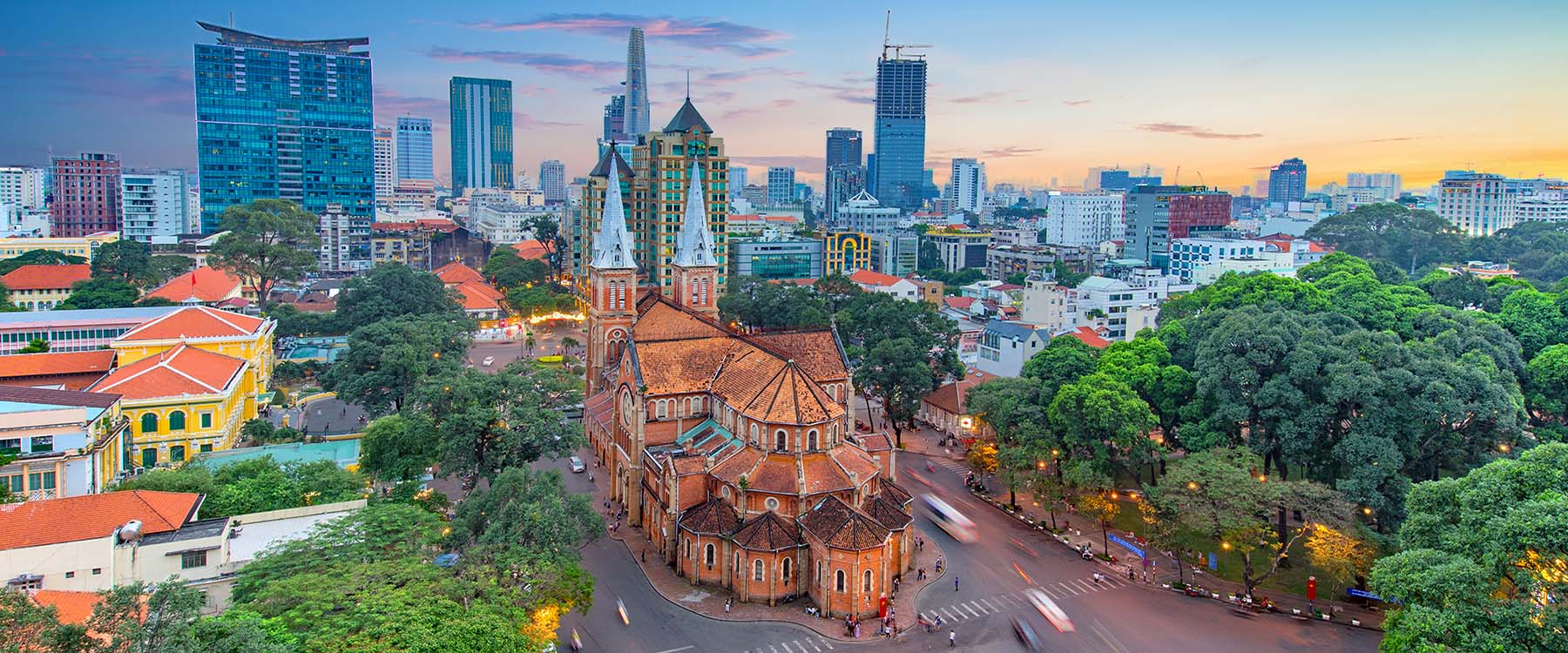
Begin at the Notre-Dame Cathedral Basilica of Saigon, a striking remnant of French colonial influence, constructed in the late 19th century with materials imported from France.
Just steps away, the Saigon Central Post Office offers a different perspective—its airy interior and iron framework reflecting a blend of European design and local adaptation.
Continue past the Ho Chi Minh City Hall, where the city’s administrative life unfolds behind one of its most recognizable facades.
This part of Saigon moves at a different rhythm—more composed, more architectural. It’s here that the city’s layered identity becomes visible.
For lunch, options are abundant. From refined hotel dining to local eateries, the range reflects the city itself.
If time allows, consider a French-inspired meal—an enduring legacy of the colonial era, and one that remains surprisingly accessible here.
Afternoon — Old Saigon and Ben Thanh Market


By early afternoon, leave the main boulevards behind.
Venture into the back alleys of older neighborhoods, where the city’s pace softens and daily life unfolds more intimately. Small markets hum with activity, residents gather over coffee, and narrow streets reveal specialized trades—mechanics restoring vintage Vespas, family-run shops, and quiet corners that rarely appear on a map.
Pause for a glass of traditional Vietnamese iced coffee at a longstanding café—strong, sweet, and unmistakably local. This is a different side of Ho Chi Minh City—not curated, not monumental, but essential to understanding its character.
From there, make your way to Ben Thanh Market, one of the city’s most recognizable landmarks. Inside, the atmosphere shifts again—denser, more energetic, with rows of vendors selling everything from textiles and handicrafts to everyday goods. Bargaining is expected, part of the rhythm rather than a disruption.
Beyond shopping, the market is equally about food. Small stalls offer quick, flavorful bites—grilled seafood, banh mi, fresh noodles—extending the culinary thread that runs through the day.
Evening — Performance and Perspective


As evening settles, return once more to District 1.
The Saigon Opera House provides a fitting close to the more structured part of the day. Performances such as the A O Show reinterpret Vietnamese culture through movement, music, and contemporary staging—bridging past and present in a single, carefully choreographed hour. It’s a different kind of storytelling—less historical, more sensory.
From there, end the day from above. At the Bitexco Financial Tower, rooftop venues like EON Heli Bar offer a sweeping view of the city’s constant motion, where Saigon feels both expansive and contained at once. Alternatively, the Saigon Saigon Bar at the Caravelle Hotel offers a more storied atmosphere—long associated with journalists and correspondents during earlier eras.
Either way, the city reveals itself differently at night.
If You Have More Time
If your schedule allows, consider extending your stay with:
- A deeper exploration of Saigon’s food scene, from street stalls to modern dining
- A day trip into the Mekong Delta
- Additional time wandering neighborhoods beyond District 1
Each adds dimension—but even within a single day, the city begins to take shape.
A Final Thought
Ho Chi Minh City rarely insists on itself. It unfolds gradually—through movement, contrast, and small, unexpected moments.
A single day offers a glimpse: enough to sense its energy, its complexity, and its quiet rhythms beneath the surface.
Our journeys are designed to build on this foundation—expanding beyond a single day into a more immersive experience of Vietnam, where cities, landscapes, and culture connect more fully over time.
- Explore our Vietnam private tours for a broader journey through the country
- Or consider a multi-destination Vietnam itinerary, where Saigon becomes one part of a larger, more layered experience
For those willing to look a little closer, even a single day in Saigon can be unexpectedly rewarding.