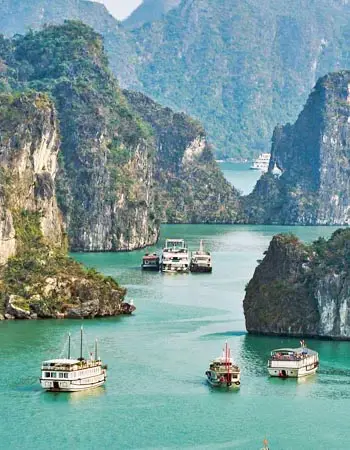
A new year often brings new travel plans—but few regions offer the range and depth of Asia.
Across its countries, travelers encounter a spectrum of experiences that rarely exist so closely together—modern cities and ancient civilizations, structured itineraries and spontaneous discovery, natural landscapes and cultural immersion.
For many, what begins as a trip becomes something more layered: a journey shaped not just by where you go, but by how each place connects to the next. Our curated Asia journeys offer a useful starting point for understanding how these experiences can be brought together seamlessly.

What follows are eight reasons Asia continues to stand apart—not as a checklist, but as a region that adapts to how you choose to travel.
A Value That Expands the Experience
One of the most practical advantages of traveling in Asia is the relative value it offers.
Across much of the region, day-to-day expenses—meals, transportation, local experiences—remain accessible, allowing travelers to engage more freely without constant consideration of cost.
This often translates into a different kind of travel rhythm: lingering longer over meals, exploring more spontaneously, or incorporating experiences that might feel restrictive elsewhere.
Rather than defining the journey, value simply creates space for it to unfold more fully.
A Culinary Landscape Without Boundaries
Food in Asia is not a single experience—it is a continuous thread that runs through every destination.
From street-side vendors to refined dining rooms, the range is both extensive and deeply rooted in local culture. Cities like Tokyo, Bangkok, and Hanoi offer entirely different expressions of cuisine, yet share a common emphasis on freshness, balance, and technique. For those drawn to this aspect of travel, our culinary-focused journeys explore Asia through its food traditions and regional flavors.
Markets, night stalls, and small eateries often provide the most immediate connection—while curated experiences such as cooking classes or private tastings add another layer of understanding.
For many travelers, these moments—simple, unstructured, and shared—become some of the most memorable.
Experiences That Span Every Pace
Asia’s range extends beyond geography into the pace of travel itself.
For those drawn to activity, opportunities are extensive—trekking in the highlands, cycling through rural landscapes, exploring coastlines by kayak, or moving between cities on high-speed rail.
At the same time, the region offers equally compelling moments of stillness—temple visits at first light, time spent in nature, or simply observing daily life unfold.
Because of this balance, itineraries can shift naturally between movement and pause without feeling fragmented.
A Living Connection to the Past
History in Asia is not confined to museums—it remains visible and accessible.
From the temples of Angkor to the imperial legacy of Kyoto and the ancient cities of China, cultural heritage continues to shape contemporary life.
In places like Luang Prabang, this continuity is particularly evident, where traditions, architecture, and daily rituals remain closely intertwined.
The experience becomes less about observing history and more about moving within it.
Space to Rest, Reset, and Reconnect
For many travelers, Asia also offers an opportunity to slow down.
Across the region, traditions rooted in mindfulness and balance—whether through Japanese onsen culture or the spiritual landscapes of Bali—create environments suited to rest and reflection.
In destinations such as Bali, this is reinforced by the natural setting itself—rice terraces, rivers, and quiet retreats that encourage a more measured pace. Many of our journeys incorporate time for this—whether through spa retreats, countryside stays, or more secluded settings.
The result is not simply relaxation, but a sense of renewal that carries beyond the journey.
The Appeal of the Unfamiliar
Part of Asia’s enduring draw lies in its ability to surprise.
Beyond its major destinations, the region offers countless opportunities to step off more established routes—into smaller communities, lesser-known landscapes, and environments that feel distinctly local.
Experiences might include time spent in Vietnam’s island regions such as Phu Quoc, or exploring Thailand’s quieter coastal enclaves beyond its more developed centers.
These moments often provide a different kind of perspective—less curated, more immediate.
Nature and Wildlife at Scale
Asia’s natural environments remain among the most diverse in the world.
From the rainforests of Borneo to the national parks of Thailand and the highland ecosystems of southwestern China, the region supports a wide range of wildlife and ecological systems.
Encounters here tend to feel immersive—river journeys through dense forest, early mornings shaped by the sounds of wildlife, and landscapes that feel largely unchanged.
For travelers drawn to nature, these environments offer both scale and depth.
Coastlines and Retreats That Define Escape
Asia’s coastal regions provide a natural counterbalance to its inland experiences.
From the beaches of Phuket and the Andaman Sea to the quieter shores of Indonesia and Malaysia, the region offers a wide range of settings—some more social, others intentionally secluded.
Accommodations often reflect this diversity, from expansive resorts to more private villas set within natural surroundings.
In these spaces, the pace shifts again—toward stillness, privacy, and time set aside.
A Final Thought
Asia is not defined by any single reason to visit.
It is experienced through accumulation—of places, moments, and contrasts that gradually form a more complete picture.
For some, it begins with a single destination. For others, it becomes a broader journey across regions. Exploring one of our curated Asia journeys is often the best way to begin—offering a clear, thoughtfully paced introduction to the region.
Either way, the experience tends to extend beyond expectation—shaped not only by where you go, but by how each place connects to the next.