Your Perfect One Day Phuket Itinerary

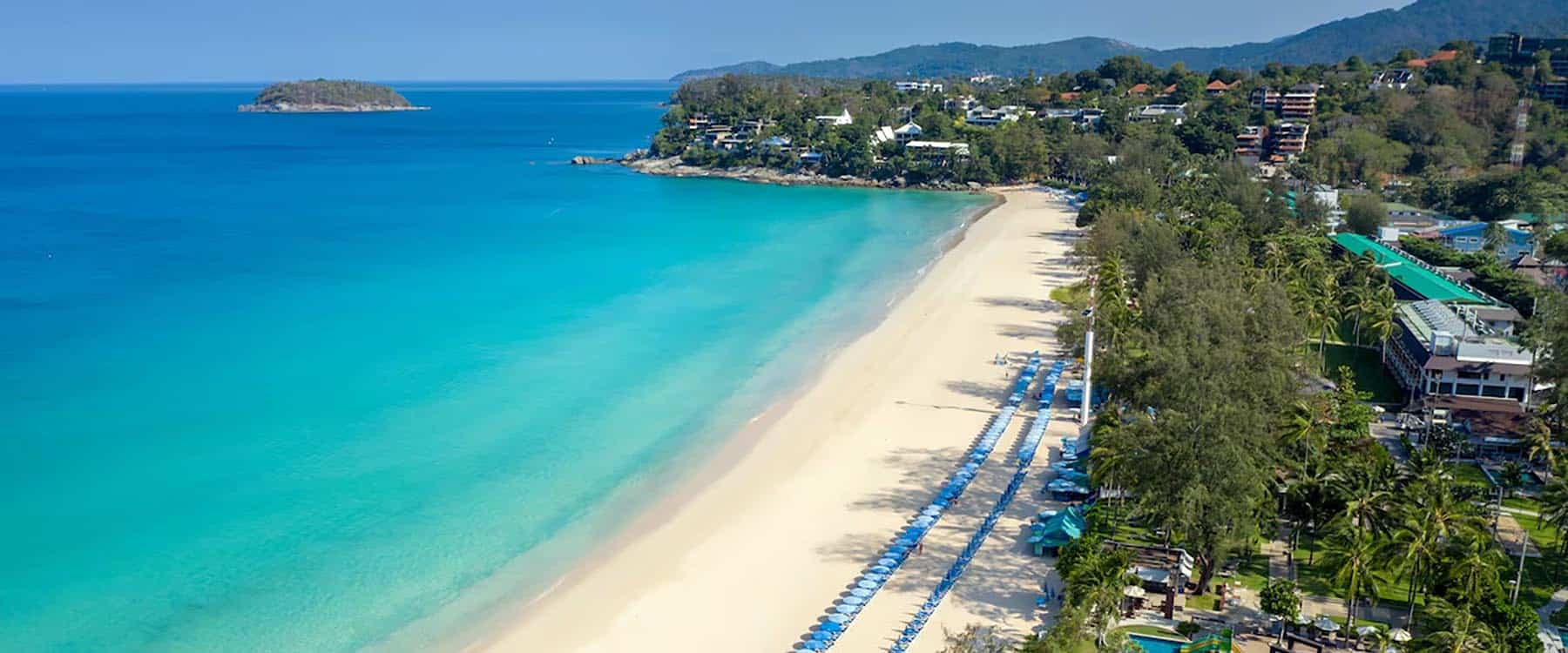
Rows of lounge chairs lined a long a pristine coastline of Katathani Phuket beach.

Phuket doesn’t always reveal itself immediately. For some, it’s reduced to its coastline—a place of beaches, nightlife, and quick impressions. A destination passed through rather than understood. But with even a single day—just one—the island begins to take on a

Phuket doesn’t always reveal itself immediately.

For some, it’s reduced to its coastline—a place of beaches, nightlife, and quick impressions. A destination passed through rather than understood. But with even a single day—just one—the island begins to take on a different shape: more layered, more varied than expected.

If you have just one day in Phuket—perhaps between time in Bangkok and Chiang Mai—this itinerary offers a way to experience it with intention.

Not as a checklist, but as a progression—from local life to coastline, from stillness to energy.

It’s a full day—but with thoughtful pacing, it comes together naturally.

Morning — A Different Introduction

Colorful evening street scene in Old Phuket Town, Thailand, with pastel Sino-Portuguese buildings, string lights overhead, and crowds of people walking and browsing shops.
Colorful row of historic Sino-Portuguese shophouses along a quiet street in Phuket Old Town, with pastel facades, decorative windows, and small storefronts at street level.

Skip the hotel breakfast—for today, the island is the introduction.

Begin in Old Phuket Town, where the pace feels removed from the beaches that define the island’s reputation. Streets lined with Sino-Portuguese architecture open into small markets, cafés, and local storefronts—less curated, more lived-in.

Along Thalang Road, stop for something simple: roti prepared fresh, perhaps with banana or egg, alongside a glass of Thai iced tea. It’s informal, quick, and distinctly local.

From there, continue on foot. Markets like Muang Boran or Chalong offer a quieter glimpse into daily routines—ingredients gathered, meals prepared, conversations unfolding without ceremony.

This is Phuket before the coastline—subtle, but essential.

Late Morning — Toward the Andaman Sea

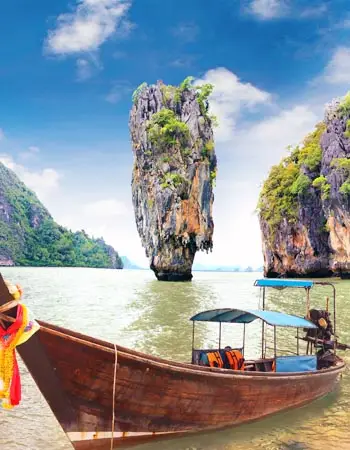
Long-tail boat anchored near Ko Tapu (James Bond Island) in Phang Nga Bay, Thailand, with iconic limestone karst rising from shallow emerald waters.
Panoramic view of a Phuket beach with turquoise water, a crescent-shaped sandy shore dotted with umbrellas and sunbathers, and lush green hills surrounding the bay.

By late morning, turn south.

Even with limited time, the sea feels non-negotiable here. Nai Harn Beach offers a more measured entry—wide sand, calm water, and a noticeably slower rhythm than the island’s more crowded shores.

Spend an hour or so here. Not to linger too long, but long enough to shift pace.

From Nai Harn, continue to Rawai—less for the beach itself, more for what happens around it. At the local seafood market, the island’s proximity to the sea becomes tangible: fish, shellfish, and crustaceans laid out with little pretense.

Choose what you like, and have it prepared nearby. It’s direct, unpolished, and one of the more grounded meals you’ll have on the island.

Afternoon — Two Directions

Thailand_1000-450_Elephant_Santuary
Aerial view of a turquoise lagoon in Phuket framed by towering limestone cliffs, with longtail boats scattered across clear, shallow waters under a bright blue sky.

The afternoon opens into choice.

For those drawn to nature, Phuket’s ethical elephant sanctuaries offer a quieter, more reflective experience—focused on observation and care rather than interaction.

For those drawn to the coast, continue north along the western shoreline. Beaches like Kata Noi and Kata gradually reintroduce movement—first calm and contained, then more animated.

At Kata, the island begins to feel social again: beachgoers, cafés, low music drifting from nearby bars. It’s an easy place to pause—whether for a swim, a drink, or simply to watch the afternoon unfold.

If time allows, continue further to Surin Beach. Less built-up, more local, it offers one of the island’s more natural settings—where the focus returns, once again, to the water.

Evening — A Shift in Energy

Nighttime street scene in Phuket with neon signs in Thai and Chinese lighting up a busy road filled with cars, motorbikes, and storefronts in a lively Chinatown district.
Aerial evening view of a coastal promenade in Phuket with a curved sandy beach, anchored boats, and a brightly lit waterfront at dusk.

As the day winds down, Phuket opens into a different kind of choice.

Patong remains the island’s most concentrated expression after dark—dense, theatrical, and unapologetically energetic. Markets spill into the streets, music carries through open-air spaces, and Bangla Road builds into a scene that is anything but subtle. It is not for everyone, but it remains part of Phuket’s identity.

The island’s nightlife, however, extends well beyond Patong.

Further south, Kata and Karon offer a more balanced rhythm. Evenings unfold along the shoreline, with beachside restaurants, casual bars, and a steady sense of activity that feels social without becoming overwhelming.

To the north, Kamala, Surin, and Bang Tao shift toward a more refined atmosphere. Beach clubs, sunset cocktails, and longer dinners by the sea create a quieter, more composed version of Phuket after dark.

Farther south, Rawai and Nai Harn feel more local and understated. Seafood dinners stretch into the evening, small bars stay low-key, and the pace feels removed from the island’s more visible energy.

Together, these areas reveal Phuket’s range. The island is not defined by one nightlife scene, but by contrast—between movement and stillness, spectacle and refinement, local rhythm and resort ease. Where you choose to end the evening shapes the final impression.

A Final Thought

Phuket rarely reveals itself all at once.

With more time, the island expands outward—to Phang Nga Bay, Koh Phi Phi, and the surrounding waters, where the experience is best approached without rushing. But even within a single day, Phuket begins to take shape through contrast: town and coast, stillness and movement, simplicity and spectacle.

For travelers looking to experience Phuket as part of something broader, private Thailand tours combining Bangkok, Chiang Mai, Chiang Rai, and Phuket offer a more complete way to connect the country’s culture, landscape, and pace.

A single day offers a glimpse. But for those willing to move through it with intention, that glimpse is often enough to understand why the island lingers.

Share:

Facebook
Twitter
Pinterest
LinkedIn
On Key

Related Posts

Travel Documents, Tips and Visa requirements for Asia

A Guide to Asia’s Entry Requirements

Planning a Trip to Asia? Here’s What You Need to Know Before You Go Planning a trip to Asia often begins with the same practical question: what do I need to enter the country? While many of Asia’s most popular destinations are now relatively straightforward for U.S. and Canadian travelers, entry requirements are ever changing, and can vary widely by country. Some allow visa-free entry, others require an e-visa and/or arrival card, and a few still involve more formal advance

eSIM for Your Asia Travel Planning

Best eSIM for International Travel (2026): SIM Cards, Data Plans & Smart Connectivity

Reliable connectivity has become a quiet backbone of international travel. From navigation and translation to reservations and real-time coordination, access to mobile data now shapes how travelers move through a destination. The question is no longer whether to stay connected—but how to do so efficiently. For 2026, that conversation increasingly centers on one solution: eSIMs for international travel. What follows is a practical guide to choosing the best eSIM for your trip—along with when alternatives like local SIM cards or

Osaka Castle rising above blooming cherry blossoms and colorful trees, set against a bright blue sky with billowing clouds.

Why Travel to Japan: Culture, Cuisine & Unique Experiences

Few destinations balance contrast as seamlessly as Japan. Across the country, centuries-old traditions exist alongside some of the most advanced urban environments in the world. Temples and shrines sit quietly beneath city skylines, seasonal rituals shape daily life, and landscapes shift from coastal plains to alpine regions within a matter of hours. For travelers, this creates not just variety, but a sense of continuity—where each experience feels connected to a broader cultural framework. For those beginning to explore what that

Snow-covered rural landscape in Takayama Japan featuring a lone farmhouse beneath a large leafless tree, surrounded by a forested hillside under a partly cloudy sky.

Discover Takayama: A Hidden Gem in the Japanese Alps

A journey through Japan often moves between its major cities and cultural landmarks—but in Takayama, the experience takes on a different rhythm. Nestled within the Japanese Alps, Takayama offers one of the country’s most complete views of its past—where Edo-period streets, traditional crafts, and regional culture remain closely tied to daily life. Paired with nearby alpine landscapes and the UNESCO-listed villages of Shirakawa-go, it becomes not simply a stop along the way, but a destination that adds depth and contrast

Fisherman net fishing at dusk in Southern Thailand

Why Visit Asia: 8 Reasons to Travel

A new year often brings new travel plans—but few regions offer the range and depth of Asia. Across its countries, travelers encounter a spectrum of experiences that rarely exist so closely together—modern cities and ancient civilizations, structured itineraries and spontaneous discovery, natural landscapes and cultural immersion. For many, what begins as a trip becomes something more layered: a journey shaped not just by where you go, but by how each place connects to the next. Our curated Asia journeys offer


Scroll to Top

Please fill out the form below so we can assist you as efficiently as possible. We aim to respond within 1-2 business days.

Name
What's your preferred contact method?
Press Ctrl Key and mouse click to multi-select.