Travel offers more than movement between places—it offers context.
The most meaningful journeys tend to go beyond surface-level experiences, drawing connections between what is seen and the historical forces that shaped it. Studies on cultural immersion consistently point to this: deeper engagement leads to greater understanding, and ultimately, more meaningful interactions with a destination and its people.
In Japan, this approach is particularly rewarding.
Few countries balance continuity and change as seamlessly. Traditions remain active parts of daily life, while modern cities evolve around them. Understanding how this came to be—through periods of isolation, transformation, and rapid modernization—adds dimension to even the simplest experiences.
For travelers beginning to explore what that journey might look like, browsing a collection of private Japan tours and customizable itineraries across Tokyo, Kyoto, and beyond provides a helpful starting point.
Experience History Through Living Heritage Sites


Japan’s historical legacy is not confined to museums—it is embedded in the places you visit.
Across the country, temples, shrines, and traditional districts remain active, not preserved as relics but maintained as part of everyday life. Many of these sites are recognized by UNESCO, particularly in Kyoto, where architectural and cultural continuity can be traced back to the Heian Period (794–1185).
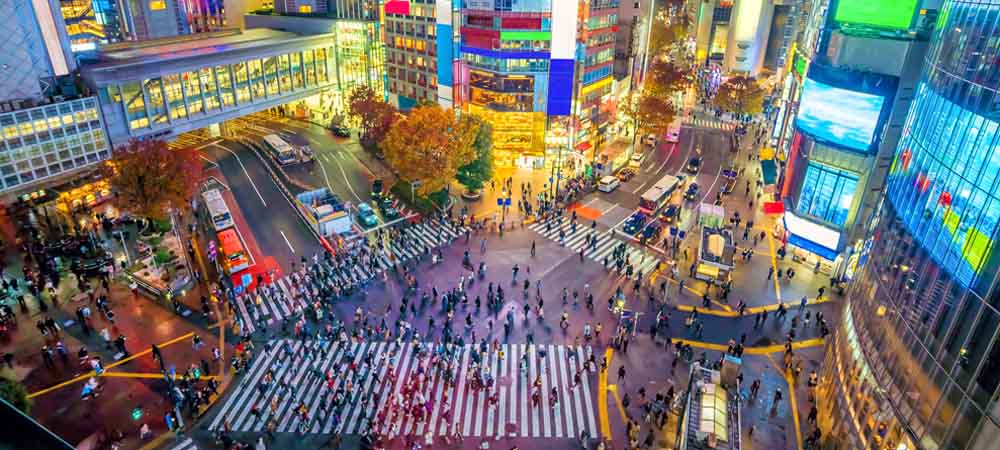
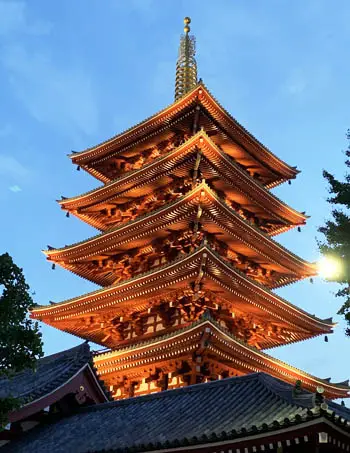
Elsewhere, historical context reveals itself differently. In Tokyo, places such as Meiji Shrine and the Asakusa district offer insight into how tradition coexists within a modern urban environment. These are not reconstructions, but spaces that continue to evolve while maintaining their historical foundations.
Understanding these sites benefits from context. While Japan is accessible to independent travelers, interpretation can be limited without deeper background. This is where privately guided cultural experiences at temples, shrines, and historic districts throughout Japan become especially valuable—offering insight into not just what you are seeing, but why it matters.
Japan also maintains high standards for licensed guides. National certification requires rigorous testing across language proficiency, geography, and history, ensuring a level of depth that enhances the experience significantly.
Explore Japan’s Museums and Archival Traditions


Museums provide another lens through which to understand Japan’s past.
Institutions such as the Tokyo National Museum and regional cultural museums offer a structured view of history—ranging from ancient artifacts to more recent developments in society and industry. For those interested in modern history, memorial museums in Hiroshima and Nagasaki provide important context on events that shaped Japan’s post-war identity.
Behind these collections is a strong archival tradition.
Japanese institutions place particular emphasis on preservation, organization, and historical accuracy. Many collections have transitioned to digital formats, ensuring long-term accessibility while protecting original materials. Archival practices often prioritize provenance and original order, reflecting a broader cultural respect for continuity and authenticity.
While most travelers engage with these spaces at a surface level, taking the time to understand how collections are curated—and why certain narratives are preserved—adds another layer of appreciation.
Understanding Japan’s Transformation

To fully appreciate Japan today, it helps to understand its periods of transition.
During the Edo period (1603–1868), Japan maintained relative isolation from the outside world. This changed with the Meiji Restoration in 1868, when the country reopened and underwent rapid modernization—reshaping its political, economic, and social systems in a remarkably short period of time.
This duality—preservation alongside adaptation—is still visible today.
Modern infrastructure, global industries, and advanced urban environments exist alongside long-standing traditions. Rather than replacing the past, Japan has integrated it into its present.
This contrast becomes especially apparent when moving between regions—for example, pairing major cities with smaller historic towns. Destinations like Takayama, often highlighted in guides such as discovering Takayama and Japan’s preserved old towns in the Japanese Alps, offer a more intimate look at how traditional life has been maintained outside major urban centers.
A More Meaningful Way to Experience Japan

Travel in Japan can be approached in many ways. It can be fast-paced and visual, or slower and more reflective.
For those willing to engage more deeply, history becomes a thread that connects each destination—transforming individual stops into a more cohesive journey.
Whether exploring Kyoto’s temples, walking through preserved districts in Takayama, or visiting cultural institutions in Tokyo, the experience becomes less about isolated highlights and more about understanding how each place fits into a broader narrative.
For travelers interested in this perspective, Japan itineraries that focus on UNESCO World Heritage sites, historic towns, and cultural continuity across multiple regions offer a more integrated way to experience the country.
A Final Thought
Japan is not defined by a single moment in time.
It is shaped by continuity—by traditions that remain active, by history that is still visible, and by a culture that has evolved without losing its foundation.
Approaching Japan through this lens does not require specialized knowledge, only curiosity. With a bit of context, even the most familiar sights take on new meaning—turning travel into something more layered, more intentional, and ultimately more rewarding.
Specially written for EXPLORIENT.com By: Relena Jamie