
Yunnan moves at a different rhythm from the rest of China.
Tucked into the country’s southwest, the province is shaped less by density than by terrain—mountain ranges, high plateaus, and river valleys that dictate how people live and travel. For visitors, this creates a journey that unfolds gradually, where cultural diversity and natural variation feel less like contrasts and more like extensions of one another.
Often described as one of China’s most biodiverse provinces, Yunnan is also home to the country’s greatest concentration of ethnic minority groups. Bordering Vietnam, Laos, and Myanmar, it has long served as a crossroads—cultural, linguistic, and architectural—where influences overlap rather than replace one another.
For those looking beyond China’s major cities, customizable Yunnan itineraries connecting Kunming, Dali, Lijiang, and Shangri-La offer a more layered introduction to the country.
Kunming & Dali — Gateways to Yunnan’s Landscape and Culture

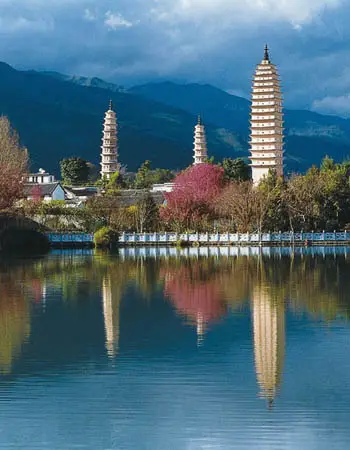
Kunming serves as a natural point of entry.
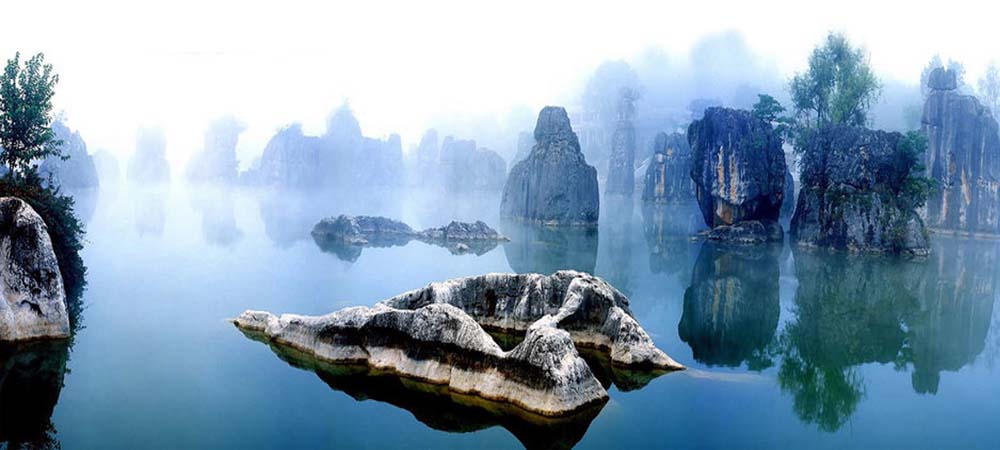
Known as the “City of Eternal Spring” for its mild climate, it provides a gentle introduction before the terrain begins to shift. Just beyond the city, the Stone Forest rises in jagged limestone formations shaped over millions of years—an early indication that Yunnan’s identity is closely tied to geology.
Further northwest, Dali introduces a different pace.
Set between the Cangshan Mountains and Erhai Lake, the Ancient City reflects a continuity of daily life within a historic setting. Stone streets, local markets, and traditional architecture coexist with modern rhythms, creating an environment that feels lived-in rather than preserved.
Together, Kunming and Dali establish the rhythm of the journey—one grounded in landscape, history, and gradual transition.
Shangri-La & Pudacuo — Toward the Tibetan Plateau


Beyond Dali, elevation begins to define the experience.
Shangri-La, sitting above 3,000 meters, marks a cultural and geographic transition toward the Tibetan Plateau. Tibetan influence becomes more visible in monasteries, prayer flags, and architectural forms, while the surrounding landscape opens into alpine meadows and forested valleys.
Nearby, Pudacuo National Park reflects the province’s ecological range.
Part of a UNESCO-designated area, it brings together wetlands, forests, and alpine lakes within a protected environment. Movement through the park is measured, guided along walkways that preserve the terrain while allowing access to its shifting ecosystems.
Set on a hillside overlooking Shangri-La, Songzanlin Monastery adds a spiritual dimension to the region. Its layered structure and gilded roofs reflect Tibetan Buddhist design, though its significance lies in its ongoing function as a place of worship. Rituals continue here, grounding the space in the present rather than the past.
Tiger Leaping Gorge & Jade Dragon Snow Mountain — Yunnan at Scale

From stillness to motion, the landscape shifts again at Tiger Leaping Gorge.
Carved by the Jinsha River, the gorge cuts deeply between towering peaks, creating one of the most dramatic settings in the region. The experience unfolds gradually—through changing vantage points, narrow paths, and the constant movement of water below.
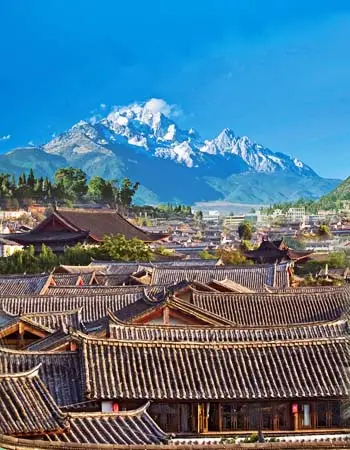
Closer to Lijiang, Jade Dragon Snow Mountain rises above the surrounding valleys, its peaks often visible long before arrival.
For the Naxi people, the mountain holds spiritual significance, tied to long-standing beliefs that remain part of daily life. At lower elevations, Yak Meadow opens into wide pastures, offering a contrast between alpine terrain and pastoral calm.
Here, Yunnan’s scale becomes physical—felt in altitude, distance, and the relationship between landscape and culture.
Lijiang — Cultural Anchor of the Naxi People


Lijiang serves as both a historical and cultural center.
Its Old Town, a UNESCO World Heritage Site, is defined by canals, stone bridges, and narrow pathways shaped by the flow of water through the settlement. While widely visited, it remains active—its layout continuing to support daily life rather than existing solely as a preserved site.
Beyond the central district, nearby areas such as Shuhe and Baisha provide a quieter perspective, where traditions continue with less visibility but equal continuity.
At Black Dragon Pool Park, the view of Jade Dragon Snow Mountain reflected in still water offers one of the region’s most recognizable images. Yet even here, the appeal is not simply visual. It is the way landscape, architecture, and cultural memory come together in one frame.
A Final Thought
Yunnan is not defined by any single place.
It is encountered through movement—between cities, elevations, and cultures that shift gradually rather than abruptly. Each destination builds on the last, creating a sense of progression that feels natural and unforced.
What begins as distance from the familiar becomes something more cohesive: an understanding shaped by terrain, culture, and the spaces in between. For travelers seeking a broader perspective, private China itineraries that highlight Yunnan’s landscapes, ethnic diversity, and lesser-visited regions offer a journey shaped less by individual highlights and more by connection.